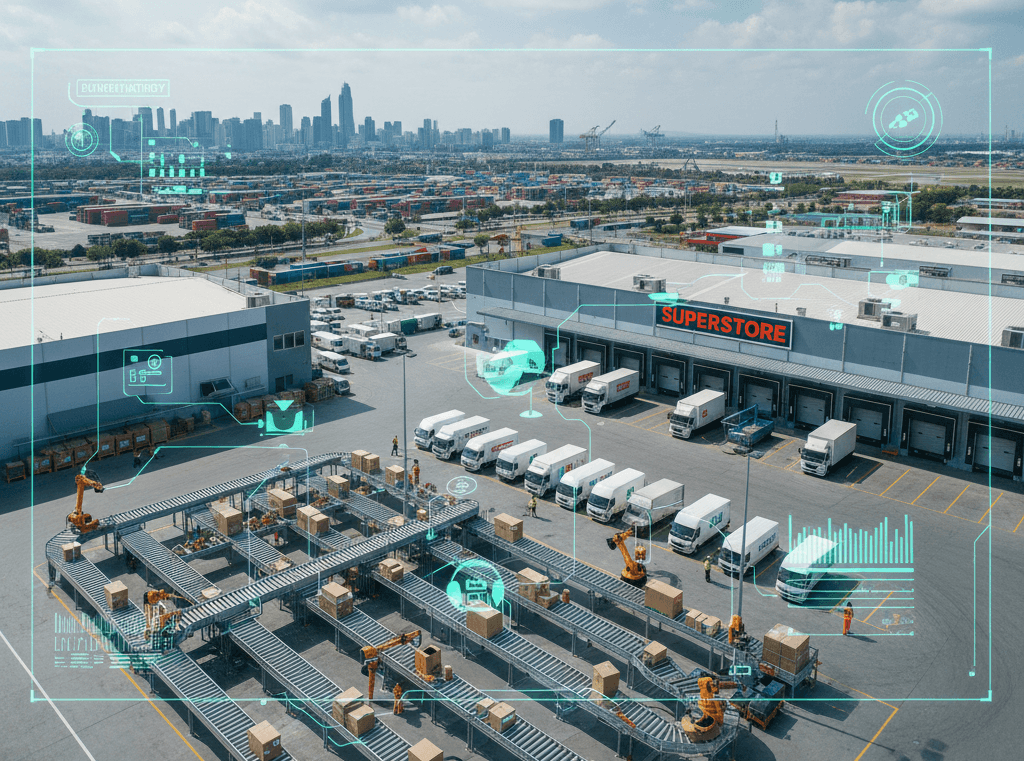
Activity across the physical goods pipeline rebalanced in March, with logistics accelerating while retail demand flattened and manufacturing held steady despite a shrinking labor base, according to a Placer.ai analysis.
Retail foot traffic across more than 1,500 chains was essentially flat in March compared to a year earlier, following several months of steady gains. However, the report notes that calendar effects likely played a role in the slowdown, as March 2026 included one fewer Saturday than the prior year, skewing weekly shopping patterns.
Average weekday traffic remained above the monthly average, suggesting underlying consumer activity was more stable than headline figures imply.
At the same time, the midstream portion of the pipeline — distribution — strengthened significantly. Visits to more than 400 e-commerce distribution centers nationwide rose 16.2% year over year, reflecting increased foot traffic across e-commerce fulfillment facilities operated by major retailers, including Amazon, Walmart and Target, and capturing activity from employees (estimated via dwell-time patterns) and logistics partners moving goods in and out of sites. The shift in Easter from April 20 in 2025 to April 5 in 2026 likely pulled some holiday shopping into late March, boosting activity, according to Placer.ai.
Manufacturing activity, meanwhile, remained stable in March, with visits to industrial facilities rising just 0.7% year-over-year. However, underlying labor trends point to a more nuanced picture. While employment in manufacturing has contracted, facility-level activity has held steady, indicating that output is being maintained with fewer workers.
«March’s data suggests that underlying consumer and industrial activity remains resilient, with calendar dynamics distorting headline trends rather than signaling a true slowdown,» the report said.
«Looking ahead, as calendar effects normalize, retail and logistics activity may better reflect this underlying strength, while manufacturing continues its shift toward higher output with leaner workforces.»